





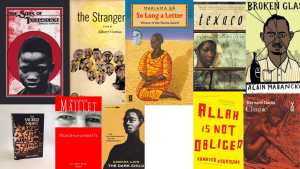



When Les Soleils des Indépendances was first submitted to French publishers in the 1960s, it was rejected on both sides of the Atlantic — in France and in Québec — before finally being accepted by Les Presses de l’Université de Montréal. The reason for those early rejections illuminates something fundamental about Francophone literature from Africa.
The problem, for metropolitan French readers and editors, was the language. Ahmadou Kourouma had written a novel in French, yes — but it was a French filtered through the syntactic structures, proverbs and worldview of the Malinké language of West Africa. Sentences did not work the way French sentences were supposed to work. Verbs behaved differently. The logic of causality bent to a different grammar.
This was not ignorance or error on Kourouma’s part. It was a deliberate and radical choice: to make the French language carry the weight of a different civilization, rather than forcing an African story into a European mold.
In retrospect, this decision opened a door through which nearly every subsequent generation of Francophone African writers has walked.

